


Iran’s New Leader. In the wake of the seismic geopolitical shifts of early 2026, the Islamic Republic of Iran has entered its most significant leadership transition in nearly four decades.
Following the assassination of Ayatollah Ali Khamenei in a high-intensity airstrike on February 28, 2026, the nation’s Assembly of Experts acted with unprecedented speed. On March 8, 2026, they officially announced that Mojtaba Khamenei, the second son of the late leader, had been elected as the third Supreme Leader of Iran.
This appointment marks the end of the “Bibi-Khamenei” era and the beginning of a new, highly securitized chapter for the nation. Often called “Khamenei Jr.” by international observers, Mojtaba’s rise is not just a change of personnel; it is a fundamental shift in how the Iranian state operates under the shadow of war.
The Shadow Prince Steps into the Light
For decades, Mojtaba Khamenei was a figure of mystery. Born in 1969 in Mashhad, he spent most of his adult life operating behind the scenes in “The Office” (Beit-e Rahbari). Unlike his father, who served as President before becoming Supreme Leader, Mojtaba has never held an elected office or given a public interview.
In 2026, his anonymity ended. His selection by a 57-vote majority in the Assembly of Experts was reportedly heavily influenced—and some say pressured—by the Islamic Revolutionary Guard Corps (IRGC). To his supporters, he represents “continuity” and a “slap in the face” to Western adversaries. To his critics, his appointment signals a move toward a hereditary monarchy, a system the 1979 Revolution originally fought to destroy.
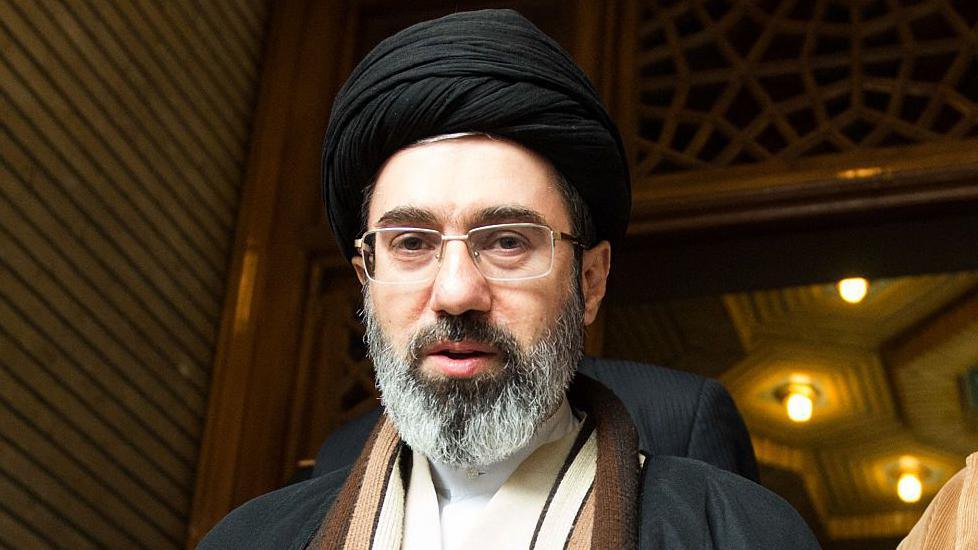
A Wounded Leader: The State of His Health
The 2026 transition was born out of tragedy and fire. The same airstrike that killed Ali Khamenei also claimed the lives of Mojtaba’s wife, Zahra, and his teenage son. Reports from the Iranian Embassy in Nicosia and international intelligence agencies suggest that Mojtaba himself was wounded in the attack.
As of mid-March 2026, the new Supreme Leader has not appeared in person. His first official message to the nation was read by a state television anchor on March 12. This “unseen” status has fueled intense speculation:
- The “Disfigured” Reports: U.S. Defense Secretary Pete Hegseth recently suggested that the leader might be “wounded and likely disfigured,” which could explain his absence from video broadcasts.
- The “Wartime Bunker” Reality: Regardless of his health, the ongoing 2026 Iran War means the leader is likely operating from a high-security underground command center to avoid further strikes.
Power Base: The IRGC’s “Man in Tehran”
If Ali Khamenei’s power rested on a balance between religious legitimacy and political savvy, Mojtaba’s power rests almost entirely on institutional muscle. He has spent years cultivating deep ties within the IRGC and the Basij militia.
- Militarization of the State: Analysts expect Mojtaba to further militarize the Iranian government. Decisions are increasingly made by security elites rather than the traditional clerical establishment in Qom.
- Hardline Strategy: In his first written statement, Mojtaba called for “continued military resistance” and explicitly stated that the Strait of Hormuz must remain a tool of pressure against the global economy.
- Nuclear Outlook: Unlike his father, who issued a fatwa against nuclear weapons, Mojtaba is perceived as more open to developing a nuclear deterrent as a final guarantee of the regime’s survival.
The Legitimacy Dilemma: Cleric vs. King
The most significant hurdle for Mojtaba is the “succession problem.” The Iranian Constitution requires the Supreme Leader to be a high-ranking cleric (a Mujtahid or Marja). Mojtaba, however, only entered serious religious schooling in his thirties and lacks the scholarly reputation of his predecessors.
Critics within the clerical circles of Qom have voiced concerns that the “Velayat-e Faqih” (Mandate of the Jurist) is being hollowed out. By choosing a son to succeed a father, the regime has arguably abandoned its revolutionary principles, adopting the very “Shah-like” dynastic traits it once overthrew.
Global Reaction: A World Bracing for Impact
The international response to the new leader has been a mix of defiance and anxiety:
- United States: President Donald Trump has called Mojtaba an “unacceptable” choice and a “lightweight,” suggesting that the U.S. does not recognize the legitimacy of the appointment. The U.S. recently offered a $10 million reward for information on his exact location.
- Russia & China: President Vladimir Putin was among the first to congratulate Mojtaba, promising “steadfast support” and solidarity during the wartime transition.
- Regional Neighbors: Across the Gulf, countries like Saudi Arabia and the UAE have entered a state of heightened military alert, fearing that a more securitized Iranian leadership will be more prone to taking risks.
Summary: Khamenei 2.0 or a New Era?
As Iran navigates the storms of 2026, Mojtaba Khamenei stands as a symbol of the regime’s will to survive at any cost. He is a leader born of conflict, operating in the shadows, and backed by the most powerful military force in the country.
Whether he can consolidate power in the long term—given the lack of clerical standing and the widespread domestic opposition—remains the biggest question of the year. For now, the “Shadow Prince” has become the “Wartime Leader,” and the world is watching closely to see if he will lead his nation toward a negotiated peace or a total escalation.


More Stories
Off-Peak Travel Shifts Autumn 2026: Trends and Data
NYC Leads Fall 2026 City Getaways: 2027 Travel Outlook
AI Travel Concierge Search Up 350%: Trends and 2027 Outlook